Quick answer: BPC-157 and TB-500 (a synthetic fragment of thymosin beta-4) are often studied together in preclinical models of tissue repair, inflammatory signaling, soft-tissue injury and blood-vessel formation. The evidence comes from laboratory and animal research, not human trials, and both are sold for laboratory research use only.
BPC-157 and TB-500 are two peptides that are frequently studied together in preclinical research. Below is a summary of the areas in which they have been investigated in laboratory and animal models.
1. Tissue Repair Models
BPC-157 has been studied in animal models of tendon, ligament, muscle and gastrointestinal tissue injury. TB-500, a synthetic fragment of thymosin beta-4, has been investigated for its role in cell migration and wound repair. Combined, they are used in studies exploring tissue-repair pathways.
2. Inflammatory Signaling
Both peptides have been examined in preclinical models of inflammation, where researchers measure their effects on inflammatory markers.
3. Soft-Tissue Research
Animal studies have looked at soft-tissue healing and range-of-motion outcomes following experimental injury.
4. Angiogenesis and Cellular Regeneration
Researchers have studied effects on blood-vessel formation and cellular regeneration in damaged tissue in laboratory models.
5. Formulation Research
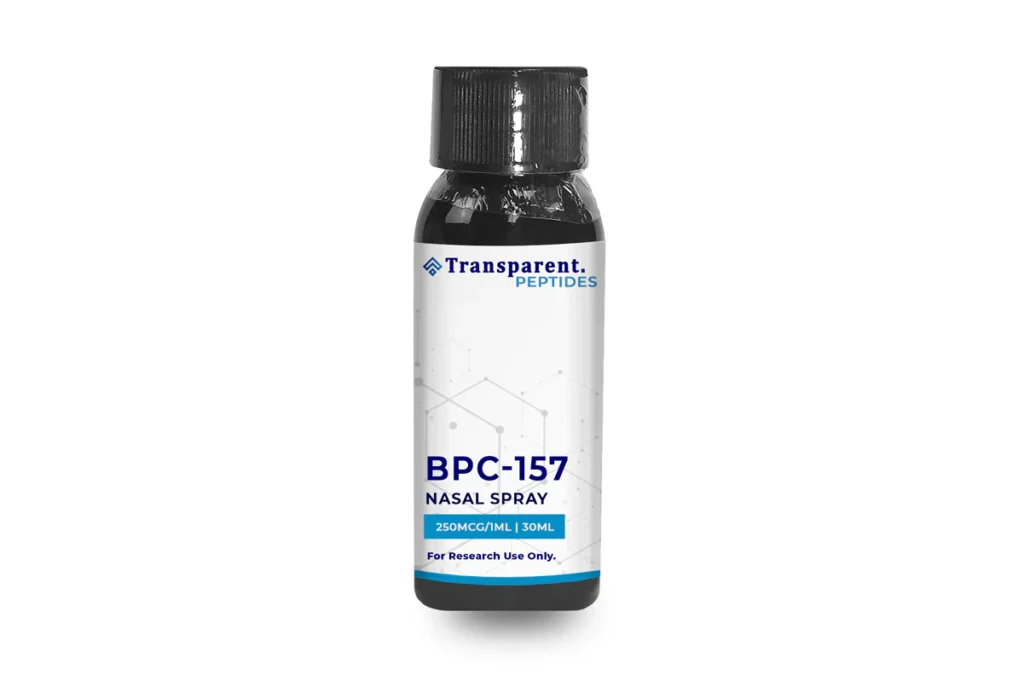
The blend is also available as a nasal formulation, which is used in research comparing peptide delivery formats.
For delivery-format comparisons, TB-500 is also listed in encapsulated form as TB-500 Capsules (bottle of 30 capsules, 200mcg each), alongside the BPC-157 and TB-500 Nasal Spray.
TB-500 is also listed as a lyophilized vial: TB-500 10mg (one vial, 10mg lyophilized powder). Research use only.
Delivery-format comparison: BPC-157 and TB-500 nasal spray vs other research formats. Research use only.
BPC-157 and TB-500 are also listed together in single lyophilized vials: BPC-157 / TB-500 10mg and BPC-157 / TB500 20mg. Research use only.
FAQ
What is TB-500?
TB-500 is a synthetic fragment of thymosin beta-4 that has been investigated for its role in cell migration and wound repair in research models.
Why are BPC-157 and TB-500 studied together?
The two peptides are combined in preclinical studies exploring tissue-repair pathways, inflammatory signaling, soft-tissue outcomes after experimental injury, and blood-vessel formation and cellular regeneration in laboratory models.
Is the BPC-157 and TB-500 research based on human trials?
No. The findings summarized here come from laboratory and animal research, not human trials.
Which BPC-157 and TB-500 formats are listed for research?
Transparent Peptides lists the BPC-157 and TB-500 Nasal Spray, TB-500 Capsules (bottle of 30 capsules, 200mcg each) and TB-500 10mg (one vial, 10mg lyophilized powder), all for laboratory research use only.
All products referenced are sold strictly for laboratory research use only and are not for human or veterinary consumption.